
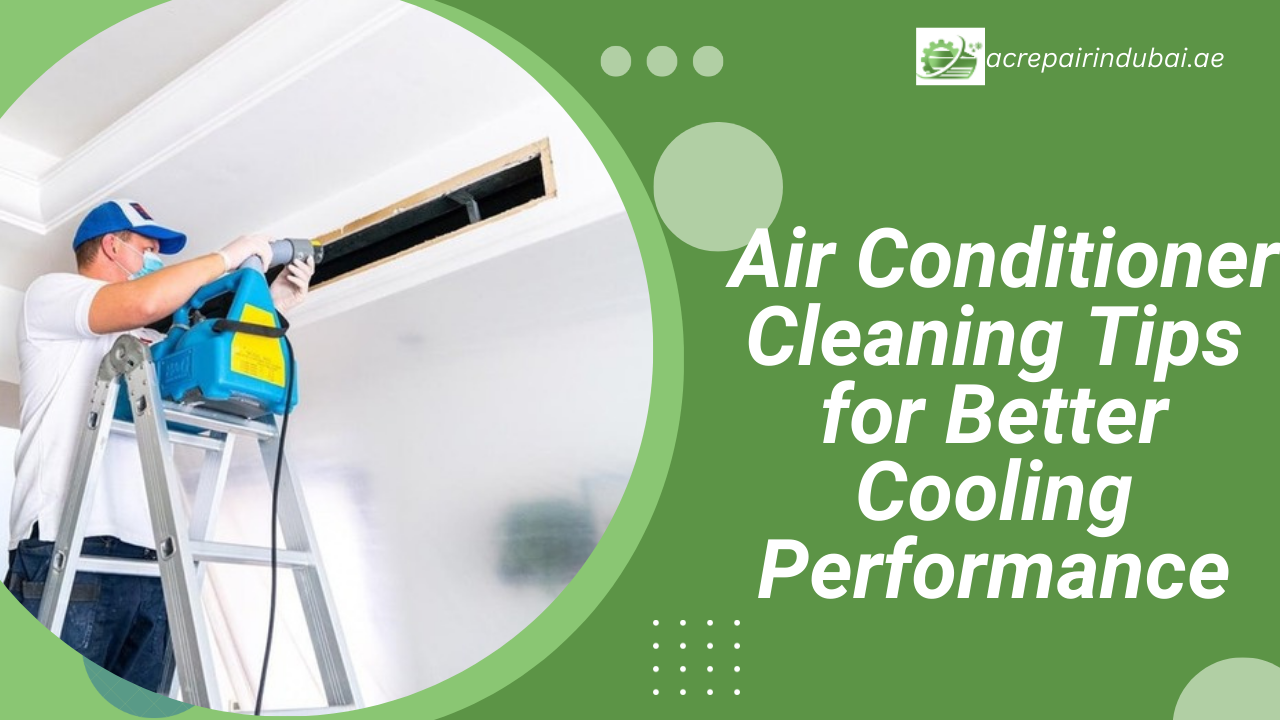
Regular air conditioner cleaning is crucial for keeping your home cool, maintaining indoor air quality, and extending the lifespan of your AC unit. Due to the airflow difficulty, unusual scent, and electricity costs, homeowners cannot address dust and debris and blocked parts in their units.
This guide highlights why cleaning is essential, how to clean air conditioner parts step-by-step, the approximate air conditioner cleaning cost, and practical DIY air conditioner cleaning methods. These tips will help you make sure that the cooling is efficient, there are no breakdowns, and you will be able to enjoy fresh air in 2025.
Importance of Regular Air Conditioner Cleaning
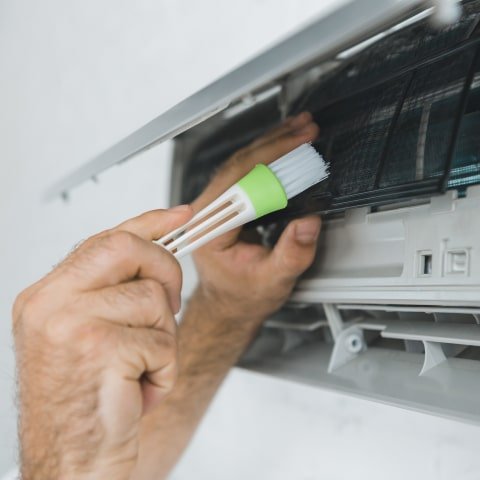
Cleaning your AC will help eliminate avoidable wear and waste as well as enhance energy efficiency. A clean air conditioner is also effective in circulating air and consumes less electricity and reduces cooling time. Dust and debris settle on filters, coils, and ducts over time, and this may result in expensive repairs in case it is left unchecked.
Regular air conditioner cleaning also enhances indoor air quality. To have families with allergies or respiratory complications, it is essential to have a clean unit so that dust, bacteria, and mold will not be in circulation, which will guarantee healthy living conditions all year round.
Benefits of Cleaning Your AC Unit
- Higher cooling capabilities and accelerated temperature control.
- Less energy use and lower electricity expenses.
- Fewer failures and long life of components.
- Purer breathing and less noisy functionality.
- Less work on compressors and motors.
- Elimination of significant repairs and expensive replacements.
- Increased IAQ due to the elimination of dust and allergens.
- Blockage of moulds and bacterial growth.
- Increased efficiency of refrigerant circulation.
- Less wear on blowers and fans.
- All areas are at the same room temperature.
Health Advantages of a Clean AC
- Stops the spread of dust, pollen and allergens within the home.
- Minimizes the growth of molds, bacteria and other mildew in vents and ducts.
- Offers cleaner air to children, the old, and the allergic.
- Helps avoid respiratory irritation and infections.
- Holds steady humidity and keeps off musty smells.
- Promotes the hygiene of the overall indoor air to make it comfortable.
How to Clean Air Conditioner – Step-by-Step Guide
Maintaining your air conditioner filters means that you have to check and clean various parts of your air conditioner such as filters, coils and ducts. Begin to switch off the AC and unplug the power to prevent accidents. Clean in an organized manner.
Professional cleaning provides safety in the handling of refrigerants, sensitive coils, and electrical parts. A well-cleaned AC not only cools better but also reduces energy consumption, minimizing the long-term air conditioner cleaning price.
Step 1: Clean or Replace the Filter
- Take out the filter of the indoor unit.
- Cleanse with mild soap and fine warm water.
- Allow it to dry thoroughly and then reinstall.
- Change when broken or over clogged.
- Step 2: Clean the Evaporator and Condenser Coils.
- Clean with a soft brush or vacuum to remove dust on the surface.
- Use coil cleaner to clean deep.
- Do not soak electrical parts with water.
- Wipe with a towel to prevent any mould growth.
Step 3: Clean the AC Drain Line and Pan.
- Test the drain pan drainage or sludge.
- Wipe it with a soft detergent or a vinegar solution.
- Make sure the flow is not obstructed to avoid leakages.
- After cleaning, reconnect everything again.
DIY Air Conditioner Cleaning Tips
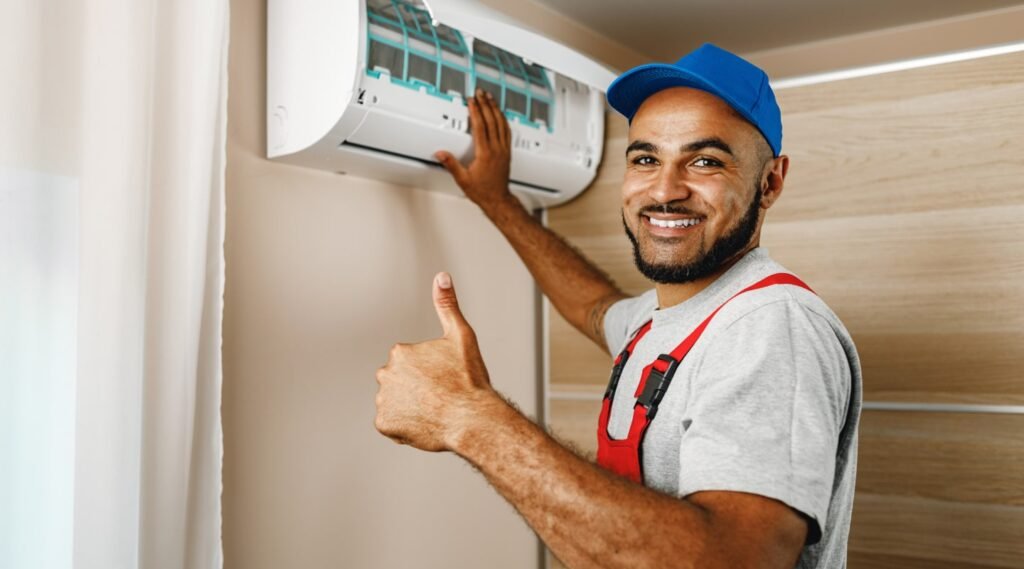
For homeowners looking to save money, DIY air conditioner cleaning is possible with careful preparation. Safety can be observed in the small chores like washing the filters, dusting the vents, and cleaning the exterior parts of the house. DIY cleaning saves some small maintenance bills and eliminates premature wearout of parts. Nevertheless, deep coil cleaning, duct cleaning, and refrigerant handling a matters of professional skills that can ensure no damages or nullified guarantees.
Key DIY Tips:
- Clean or replace filters frequently.
- Wipe and dust inside and out vents.
- Wipe off the exterior and clear up.
- Do not use severe chemicals on coils.
- Before cleaning, make sure that the unit is off.
- Deep coil or duct cleaning is to be scheduled with a professional.
Simple Tools and Materials You Need
Having the right tools ensures safe and effective air conditioner cleaning. These are simple products that can be used to clean the dust, dirt and debris without harming the AC units.
Essential Tools & Materials:
- Microfiber and soft brush: This is used to clean the soft parts of the skin gently.
- Safe residue remover- mild soap or coil cleaner.
- Nozzle all-vacuum clean vents and coils.
- Panel removal screwdriver and protective gloves.
- A bucket of lukewarm water to wash filters.
- Eye protection in the event of exposure to cleaning chemicals.
Common Mistakes to Avoid During DIY Cleaning.
- Excessive wetting of coils and electrical parts.
- Chemicals that destroy metal or plastic are used.
- Leaving out filter drying, which may lead to mould.
- When using coils and fins, apply excess pressure.
- Omitting precautions in working with screws or wiring.
- Failure to clean the drain pan and cause clogs.
Air Conditioner Cleaning Cost in 2025
Understanding air conditioner cleaning costs helps plan budgets and ensures timely maintenance. The prices depend on the type of units, size, and the cleaning required. Professionals are hired to provide an extensive cleaning service and in most cases they guarantee a warranty.
The residential and commercial rates are not equal, and the merger of the cleaning and maintenance packages may save the total cost. Such professional service can be filter cleaning, cleaning the coils, sanitization of ducts, and verification of electrical parts.
Average Costs for Residential Units
- Call-out & inspection: 100-150 AED
- Basic AC cleaning service: Begins at 150 AED.
- Deep cleaning: Begins at 450 AED.
- Duct cleaning: 650 AED per unit
- Replacement of filters: Begins at 750 AED.
- Significant repairs (where necessary): 300+ AED based on brand and capacity.
- Studio / 1-Bedroom: 750-950 AED
- 3-Bedroom Villa: 650-2,100 AED
- 5-Bedroom Villa: 1,300-3,500 AED
- Large Villas (6+ Bedrooms): 2,200-4,500 AED
Warranty Maintenance and repair warranty: 1 month on a standard form; 5 year warranty on new complete installation.
Cost-Saving Tips
- Have routine maintenance to avoid huge repairs.
- Do minor homemade jobs such as cleaning filters.
- Book package offers on a visit basis.
- Couple seasonal cleaning with energy audits.
- Emergency cleaning charges can be avoided by planning.
- Request the providers to provide a discount on annual contracts of service.
How Often to Clean Air Conditioner for Optimal Performance
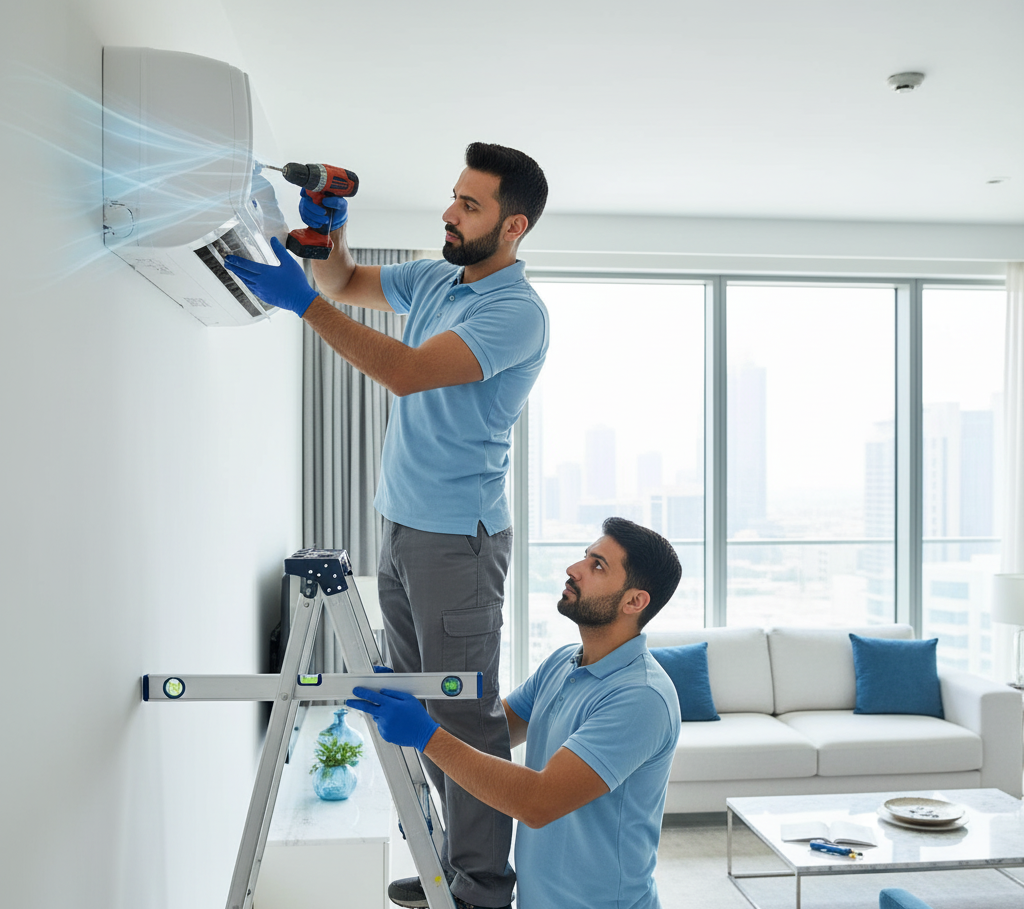
The cleaning frequency is determined by the number of units used, their location and the indoor air quality. Routine cleaning will make sure that there is efficient cooling, it will curb mold and energy expenses will be minimized. It is advisable to clean filters monthly when there is much usage.
Coil cleaning, drain pan should be maintained and duct cleaning should be carried out on an annual or seasonal basis. This timescale will help to minimize the wear on parts and enhance the quality of the indoor air.
Recommended Cleaning Schedule
- Monthly: Cleaning and removal of filters.
- Vacuum vents and interior unit 3-6 times a year.
- Every year: Coils, drain pan and ducts deep cleaning.
- Modify according to the use: clean more frequently in the summer.
Signs Your AC Needs Immediate Cleaning
- Weak airflow from vents
- Strange or musty odors
- Reduced usage, increased electricity bills.
- Coat formation of ice or water.
- Noise of operation or abnormal automatism.
- Observation of dust/ debris on vents and filters.
Safety Tips for Air Conditioner Cleaning at Home
It is essential to be careful when cleaning your AC at home to avoid damaging any of the parts and causing damage to yourself. When working with electrical parts or moving machinery, always turn off power before touching electrical parts or moving machinery. Bathing should be avoided by the use of high-pressure water sprays, rough chemicals, and screws that are over-tightened. Safety tips are considered to provide efficient cleaning and avoid expensive errors.
Key Safety Tips:
- Never, ever leave the power on when cleaning.
- Sprays of high-pressure water should not be used on components.
- Do not apply complex chemicals that may destroy coils or filters.
- Electrical components should be handled with care to avoid shocks.
- Be careful not to over-tighten screws in reassembling panels.
- Warn yourself with gloves and goggles.
What to Avoid When Cleaning Indoor Components
People should exercise the necessary caution when cleaning the interior parts of their AC so that they do not hurt the unit or inflict self-injury. The over-spraying of the water should be avoided in the environment of electrical parts because it can short out the system. Do not use harsh brushes that bend or break fine coils, and do not put chemicals on motors or wires. Never disassemble anything without following the instructions given by the manufacturer and also, before reconnecting any power, make sure all the parts are dry. Forgetting about necessary safety equipment such as gloves and goggles to use during cleaning.
Outdoor Unit Safety Steps to Prevent Damage
- Switch off the connected power on the main breaker.
- No debris or leaves covering the condenser.
- Never sit or stand on unsteady or unit surfaces.
- Clean the coils with soft brushes and vacuums.
- Make sure that drain lines are clear.
FAQs:
What is the best frequency of cleaning an air conditioner?
Filtration of air conditioners: Cleaning of air conditioner filters should be done on a monthly basis with regard to their intense usage particularly during summertime. Coils, drain pans and ducts are supposed to be cleaned professionally at least once a year to ensure efficient cooling and good quality indoor air.
Should I clean my air conditioner myself or should I hire someone?
Simple chores such as cleaning of filters, dusting of vents and wiping of the outside unit can be considered DIY. Nevertheless, the cleaning of deep coils, duct sanitization and refrigerant-related works should be left to the professionals, which will not produce harm and warranty problems.
So, what can happen when an air conditioner is not cleaned on a regular basis?
Poor air circulation, unpleasant smells, increased electricity payments, ice build-up on coils, and frequent failure can be caused by a lack of cleaning. With time, the accumulation of dirt may result in expensive repairs or the premature replacement of the AC unit.
How much does professional air conditioner cleaning price in 2025?
Basic AC cleaning will start at approximately 150 AED in 2025, deep and duct cleaning can cost between 450 to 650 AED per unit. The prices are determined according to the unit size, type, and depth of services.
What are the indicators that my AC requires cleaning urgently?
Symptoms on the lookout are hot temperatures, odd or stale odor, escalating electricity costs, water leaks, ice on the pipes or coils and apparent dust on vents or filters. These are the signs of clogged or polluted internal parts.
Conclusion
Regular air conditioner cleaning improves cooling efficiency, reduces energy costs, and prolongs AC lifespan. Perks of DIY and scheduled maintenance and professional assistance ensure that your system is not put to waste. Professional cleaning is performed to ensure maintenance of your investment by means of warranty and complete cleaning of the coil, duct and filter. Air conditioner cleaning cost in 2025 is reasonable and varies by unit size, service type, and complexity.
Book AC repair in Dubai now and have the fresher air, better cooling and lower electricity bills. Your investment in AC will be safeguarded by filter replacement and deep cleaning services as well as by professional inspections which will enable you to spend the year in comfort.